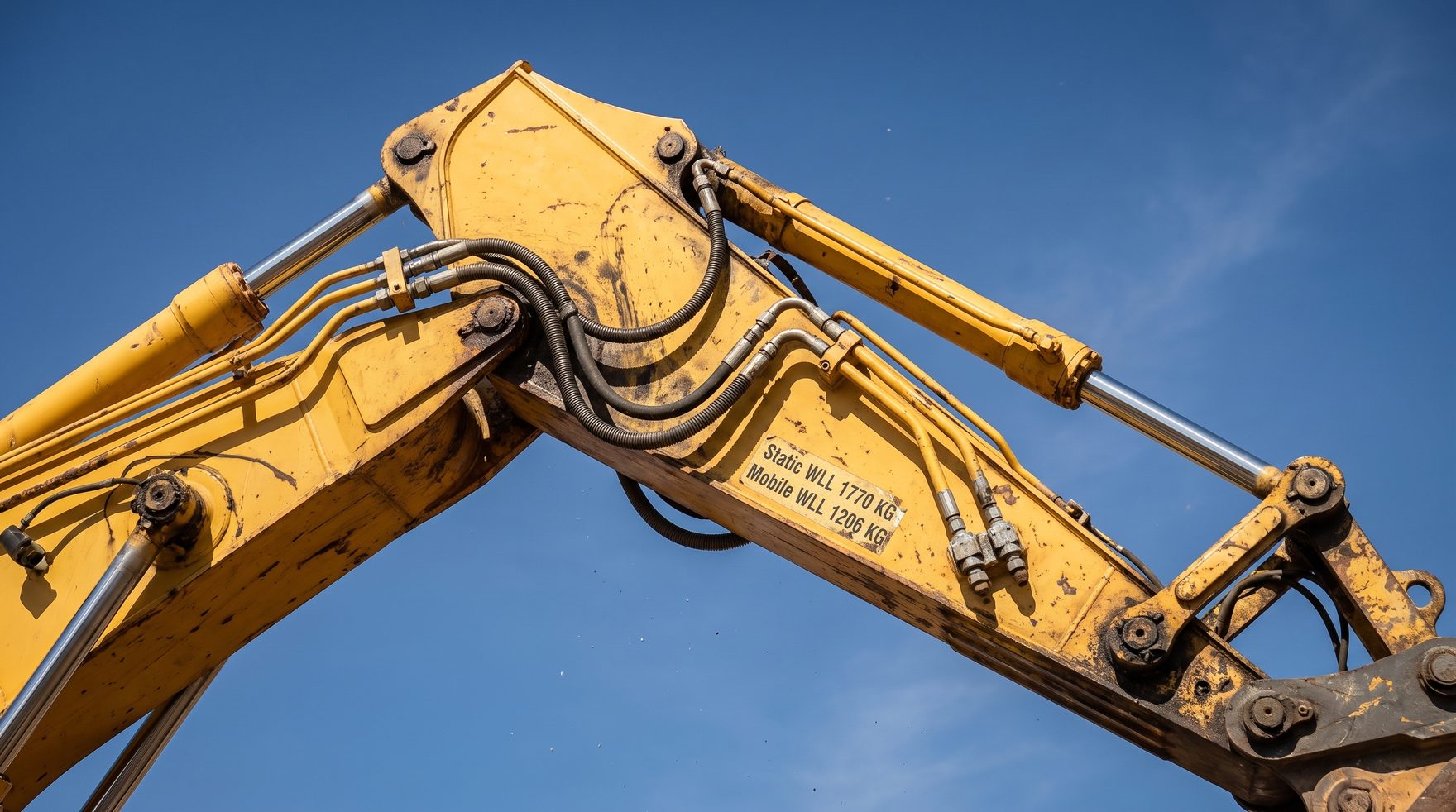
Here's the maddening part: empty, the machine's a champ. Curl a bucket with nothing in it, wave the arm around, feels great. Then you go to actually dig, lift, or push something, and it bogs down, creeps, or quits on you like it just remembered it had somewhere else to be. Bonus points if it's strong first thing in the morning and turns into a wet noodle by lunch once everything's hot. All of that's the same message: the hydraulic system can't hold pressure under real load anymore, and it's been quietly getting worse for a while.
What "weak under load" is actually telling you
A hydraulic system makes flow (how fast things move) and holds pressure (how hard they push). With no load, it barely needs any pressure, so a tired system still looks fine. Put a real load on it and now it has to build and hold high pressure. If something is letting that pressure slip, past a worn pump, an open relief valve, or a leaking cylinder seal, the machine goes soft exactly when you need it most.
The common causes
A worn hydraulic pump that can't hold volume and pressure under load anymore.
A main relief or pressure valve set too low, worn, or stuck partly open, so it dumps pressure early.
A cylinder bypassing internally, where worn seals let oil slip past the piston instead of pushing the load.
Low, aerated, or contaminated fluid, or a collapsed suction hose starving the pump.
A plugged suction or return filter the pump has to fight to pull oil through.
A load-sense or signal fault on machines that meter flow by demand, so the pump never gets told to work hard.
The "only weak when it's hot" clue
This is a big tell, so pay attention to it. Hydraulic oil thins out as it heats up. In a pump or valve that's already worn, thin hot oil slips past the worn clearances even easier, so the machine works fine for the first hour and then goes soft once everything's up to temperature. When a guy tells me "it's strong cold, gutless hot," that almost always means internal wear in the pump or a relief valve, not something cheap and simple. Catch it early. A pump that's slipping when it's hot is a pump already writing its own retirement letter.
"A pump that's slipping when it's hot is a pump already writing its own retirement letter."
What you can check before you call
- Fluid level and condition. Milky or foamy oil means water or air is getting in; dark, burnt-smelling oil means it's been cooked.
- When the filter was last changed. A neglected filter is a cheap, common cause worth ruling out first.
- Look for leaks and soft hoses. A hose that balloons under load or a weeping cylinder is a visible clue.
- Don't keep running it low or hot. A pump run low on oil or badly overheated can fail fast and take metal through the whole system.
Pump, valve, or cylinder? A pressure test settles it
Here's the thing that saves you money: weak hydraulics feel identical to the operator whether the fix is a $200 valve adjustment or a whole new pump. Same soggy lever, wildly different bill. The only way to actually know is to put a gauge on it and read the real pressures at the pump, the relief, and the circuit under load. That test tells us whether the pump is making pressure, whether the relief is holding it, and whether a cylinder is bypassing, so you buy the part that's actually bad instead of throwing parts at it and hoping.
Questions
Weak hydraulics, quick answers
Why are my hydraulics weak only when the machine is hot?
Hydraulic oil thins as it heats up. In a worn pump or relief valve, thin hot oil slips past the internal clearances, so the machine is strong cold and goes weak once it's up to temperature. That symptom usually points at internal wear, not a simple fix.
Can low hydraulic fluid make the machine weak?
Yes. Low fluid, a plugged filter, or a collapsed suction hose can starve the pump and cause weak, slow, or erratic power. It's one of the cheapest things to check first, and running the machine low can damage the pump.
Is it the pump or a valve?
They feel identical to the operator, so the only reliable way to tell is a pressure test. Putting a gauge on the pump, the relief, and the circuit under load shows exactly where pressure is being lost, so you replace the right part instead of guessing.
Written by
Tyler Reed, Reed's Mobile Services
Tyler is a mobile heavy equipment mechanic and welder based in Middleburg, Florida, with 12 years turning wrenches on excavators, loaders, dozers, and tractors. He fixes machines where they sit, across North Florida and South Georgia. Got one down? Call or text (352) 507-3088.