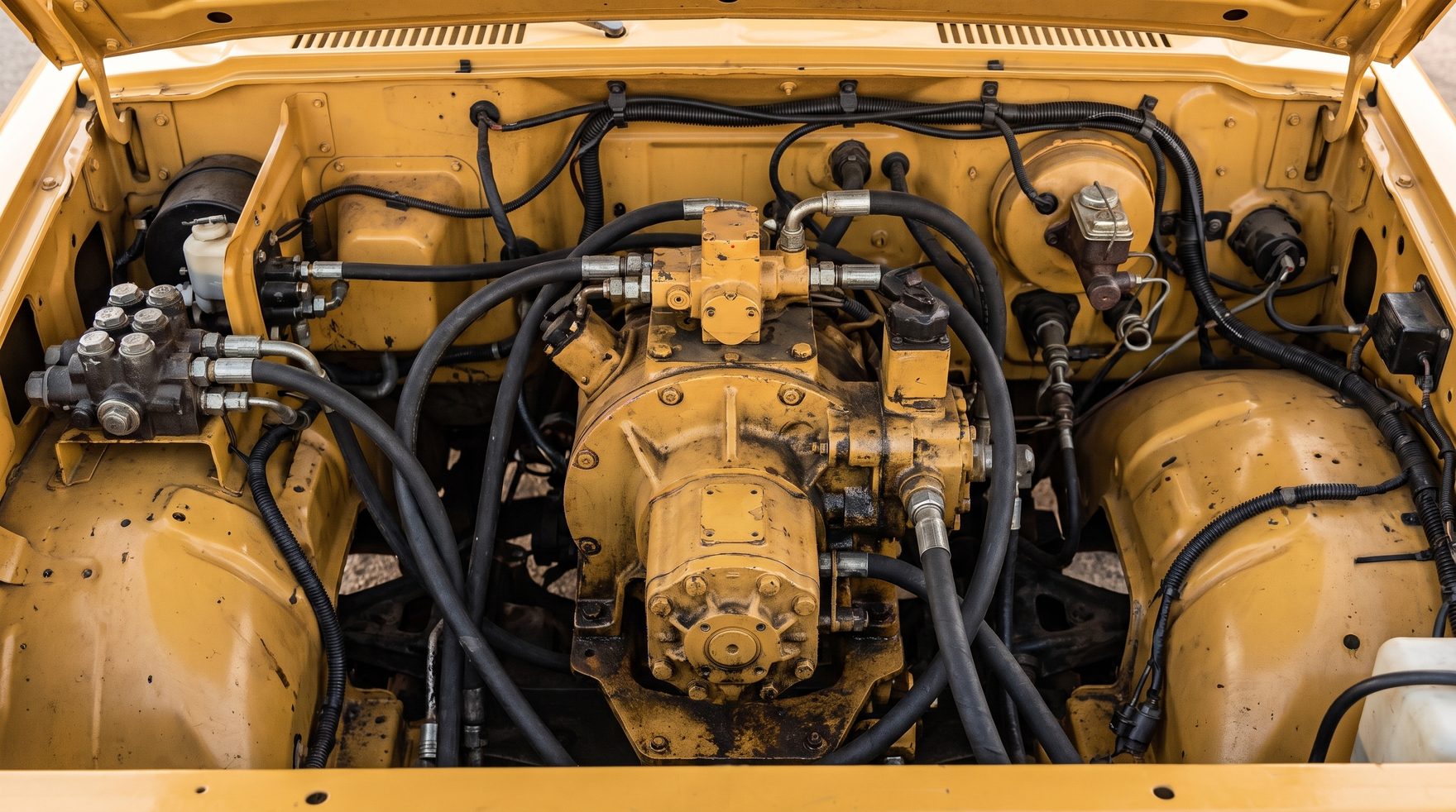
You climb on, turn the key, and the thing moves like it's got the flu. No power, top speed capped, some cheerful little warning glowing at you from the dash. That's limp mode, and if you run anything built in the last fifteen years, you'll meet it eventually. Here's the part nobody leads with, though: the machine isn't really broken. It's throwing a tantrum on purpose. It caught a fault somewhere in the emissions system and decided the safest thing to do was sit down in the middle of your workday and refuse to get back up. Annoying? Absolutely. But it beats grenading a ten-thousand-dollar after-treatment system, which is exactly what it's trying to avoid.
What limp mode actually is
Modern diesel machines watch dozens of sensors constantly. When one of them reads something the computer doesn't like, especially in the emissions system, the machine steps down its own power in stages. First you might get a warning light. Ignore it and the machine drops into a hard derate, sometimes down to idle speed only. It does this on purpose so you can't cook a turbo, glaze a DPF, or damage the engine while the problem goes unaddressed.
Because it's a protection mode, you can't just turn the key off and back on to clear it. The condition that set it's still there. The fault has to be read and the cause fixed before the machine will give you full power again.
What usually puts a machine in derate
Most derates on heavy equipment trace back to the same short list. It's almost always the after-treatment system, the parts that clean up the exhaust:
DEF quality or level sensor reading low or out of spec.
A clogged DPF, the diesel particulate filter, that can't finish a regen.
A dead NOx sensor. There are usually two, and either one can trip the derate.
A DEF dosing or injector fault, so the system can't spray DEF correctly.
Contaminated or wrong DEF fluid, or fluid that froze and never fully purged.
Every one of those throws its own fault code. That's why step one is always to plug in and read the codes, not to start throwing parts at it.
"My DEF tank is full, so why am I still derated?"
This one drives everybody nuts. You fill the DEF tank, you feel like a responsible adult, and the machine still won't move. A full tank only tells you there's fluid in there. It says nothing about whether the system actually likes that fluid. If the quality sensor thinks the DEF is off, a NOx sensor died, the dosing system can't spray, or somebody put the wrong stuff in the tank, you'll sit there derated with the gauge reading full. Topping it off is worth doing. It's just rarely the hero of the story. The fault code is what actually points at the bad part.
"A full tank only tells you there's fluid in there. It says nothing about whether the machine actually likes that fluid."
What you can safely check yourself
Before you call anyone, a few things are worth a look, and none of them will hurt the machine:
- Check the DEF level, and if you can, that the fluid looks clean and clear, not cloudy or discolored.
- Write down the exact code or message on the dash. It's the single most useful thing you can hand a mechanic.
- Note whether a regen was due or got interrupted, if your machine shows regen status.
What you should not do is white-knuckle it through the day in a hard derate, or pay some guy to clear the code so you can keep pushing. Clear the code without fixing the cause and it just comes back, usually grumpier, and running it hard through a DEF or DPF fault is how a cheap sensor turns into a very expensive after-treatment bill.
"Can't you just delete it?"
People ask me this every single week, so here's the straight answer: no. Two reasons, and they're both good ones. One, deleting or tampering with an emissions system is against federal law, real fines, not a slap on the wrist. Two, it's a bad idea mechanically anyway. A delete can throw the machine into a different fault, scramble the ECM, and torch the resale value, all to dodge replacing a sensor you were going to replace regardless. The right move is boring and it works: find the failed part, replace it, run the regen if the DPF's loaded, and clear the derate the correct way. Fixed, legal, and it stays that way.
Questions
Limp mode, quick answers
Will limp mode go away on its own?
No. It's a protection mode, so it stays until the fault that set it's fixed. Cycling the key won't clear it, and if it does drop out briefly it'll come right back once the machine sees the same problem.
Is it safe to keep working in limp mode?
Not really. The machine derated itself to prevent damage. Working it hard through a DPF or DEF fault can turn a cheap sensor repair into a full after-treatment replacement. It's better to get it read and fixed.
Can you clear a derate on-site instead of hauling it to the dealer?
Yes. We bring the scan tool to your machine, read the codes, run a forced regen if the DPF needs one, and repair the failed part right there. No high-dollar haul, and the dealer can be weeks out just to look at it.
Written by
Tyler Reed, Reed's Mobile Services
Tyler is a mobile heavy equipment mechanic and welder based in Middleburg, Florida, with 12 years turning wrenches on excavators, loaders, dozers, and tractors. He fixes machines where they sit, across North Florida and South Georgia. Got one down? Call or text (352) 507-3088.