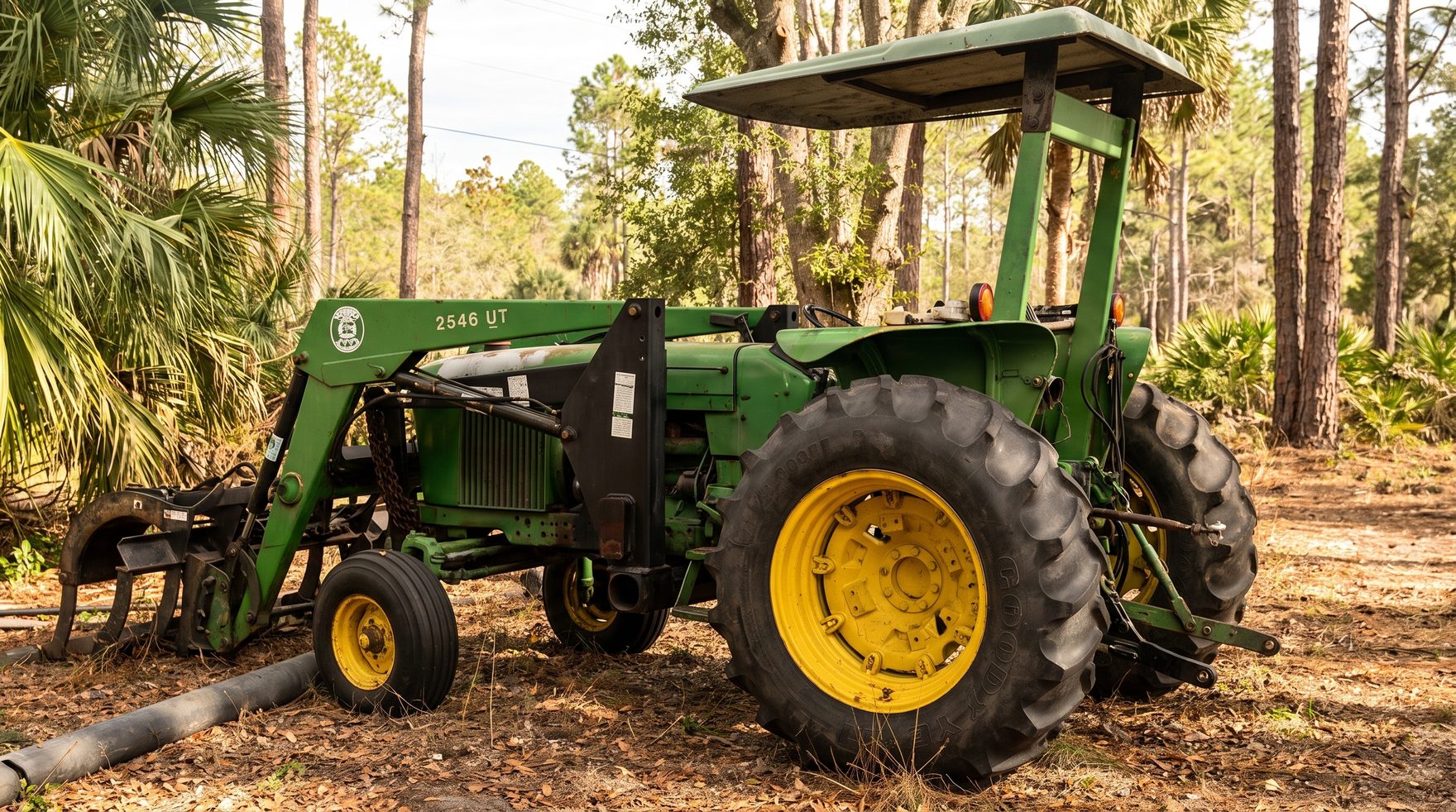
The loader used to snap up a full bucket without breaking a sweat. Now it groans, hesitates, and settles for half a lift like it's asking permission. You tell yourself it's fine, it's just cold this morning, it'll loosen up. Then it doesn't loosen up. It gets worse by lunch, worse by the weekend, and now you're babying a tractor that used to just work. Here's the thing about hydraulics: they don't get moody for no reason. Something specific is stealing your pressure or your flow, and it's not going to fix itself while you wait for a slow week that never comes. Let's find out what's actually going on before you end up parking a good tractor over a problem that's usually pretty ordinary to fix.
What Weak Hydraulics Are Actually Telling You
A tractor's hydraulic system runs on two things: enough fluid and enough pressure to move that fluid where it needs to go. When the loader feels weak, slow, or spongy, one of those two things is coming up short somewhere between the pump and the cylinder.
It's rarely mysterious. Low or aerated fluid, a plugged filter or suction screen, a hydraulic or charge pump on its way out, a relief valve set low or stuck open, or a cylinder that's bypassing internally. That's the whole list. The trick isn't finding a wild answer, it's figuring out which of those five ordinary suspects is yours.
The Usual Suspects Behind Weak or Slow Hydraulics
Before you start swapping parts, here's what tends to actually cause it. Most of these show up more than once a season on tractors that see real work.
Low or aerated fluid. not enough oil in the system, or air getting pulled in through a loose suction line, gives you a spongy, weak lift instead of solid pressure.
Plugged filter or suction screen. restricts flow to the pump so it's straining and starving at the same time, and everything feels sluggish.
Worn hydraulic or charge pump. the pump can't build the volume or pressure it used to, especially once it's warmed up and clearances open a hair more.
Relief valve set low or stuck. caps your pressure well below spec, so the loader tops out weak no matter how hard you push the lever.
Cylinder bypassing internally. worn seals let oil slip past the piston inside the cylinder, so you lose lift force right where you need it most.
Worse When It's Hot? That's Wear Talking
If the hydraulics work okay cold in the morning and get noticeably weaker after an hour of running, that's not your imagination and it's not bad luck. That pattern points to internal wear.
Hot hydraulic oil is thinner than cold oil. Thin oil slips past worn clearances in a pump or cylinder a lot easier than thick, cold oil does. So a pump or cylinder that's borderline can still fake it in the morning, then fall apart on you by early afternoon once the fluid thins out. It's not the heat causing the problem. The heat is just exposing wear that was already there.
"It's not the heat causing the problem. The heat is just exposing wear that was already there."
Lifts Fine Empty, Stalls Under a Load
This one's specific enough that it narrows things down fast. If the loader will raise an empty bucket with no complaints but bogs down or stalls the second you load it up, you're looking at the pump or the relief valve, not the cylinder and not the fluid level.
An empty bucket doesn't need much pressure to move, so a weak pump or a low relief setting can still fake a decent lift. Add real weight and suddenly the system needs pressure it doesn't have. That's the difference between a flow problem and a pressure problem, and it matters for what gets fixed.
What You Can Check Before You Call Anybody
Some of this you can rule out yourself in ten minutes with the tractor sitting in the yard. It won't fix a worn pump, but it might save you a service call for something simple.
- Fluid level. check it with the loader arms down and the tractor on level ground, per your owner's manual. Low fluid is the single most common cause of weak lift.
- Fluid condition. milky, foamy, or burnt-smelling oil means water, air, or heat damage is already in the system.
- Filter and suction screen. a filter that hasn't been changed in a long time is quietly starving your pump.
- Loose suction line fittings. a fitting that's sucking air will show up as foamy fluid and a spongy, inconsistent lift.
- Relief valve access point, if equipped. some tractors have a service port for checking system pressure directly, worth knowing about before you guess.
Why We Gauge-Test Before We Replace Anything
Here's where a lot of good tractors get an expensive part thrown at them for nothing. Weak hydraulics can look like a bad pump, a bad relief valve, and a bad cylinder all at once, because the symptom on the outside is the same: not enough lift. Guessing wrong means you're out a pump that wasn't the problem, and you're still weak on the loader.
We hook up a hydraulic pressure gauge and actually measure what the system is doing at the pump, at the relief valve, and at the cylinder under load. That tells us exactly where the pressure is disappearing before anything gets pulled apart. It's slower than swapping parts on a hunch, and it's a lot cheaper in the long run.
Questions
Weak hydraulics, quick answers
Why does my tractor loader lift fine when it's cold but weak once it warms up?
Hot hydraulic oil is thinner than cold oil, so it slips past worn clearances in a pump or cylinder more easily. That pattern usually points to internal wear rather than a fluid or filter issue.
My loader lifts an empty bucket okay but stalls when it's full. What does that mean?
That points to the hydraulic pump or the relief valve rather than the fluid level or a cylinder. An empty bucket needs little pressure, so a weak pump or low relief setting can still move it, but a real load exposes the shortfall.
What should I check myself before calling a mechanic about weak tractor hydraulics?
Check the fluid level on level ground with the loader down, check the fluid for a milky or burnt appearance, and check when the filter was last changed. These are common, simple causes of weak lift.
Written by
Tyler Reed, Reed's Mobile Services
Tyler is a mobile heavy equipment mechanic and welder based in Middleburg, Florida, with 12 years turning wrenches on excavators, loaders, dozers, and tractors. He fixes machines where they sit, across North Florida and South Georgia. Got one down? Call or text (352) 507-3088.