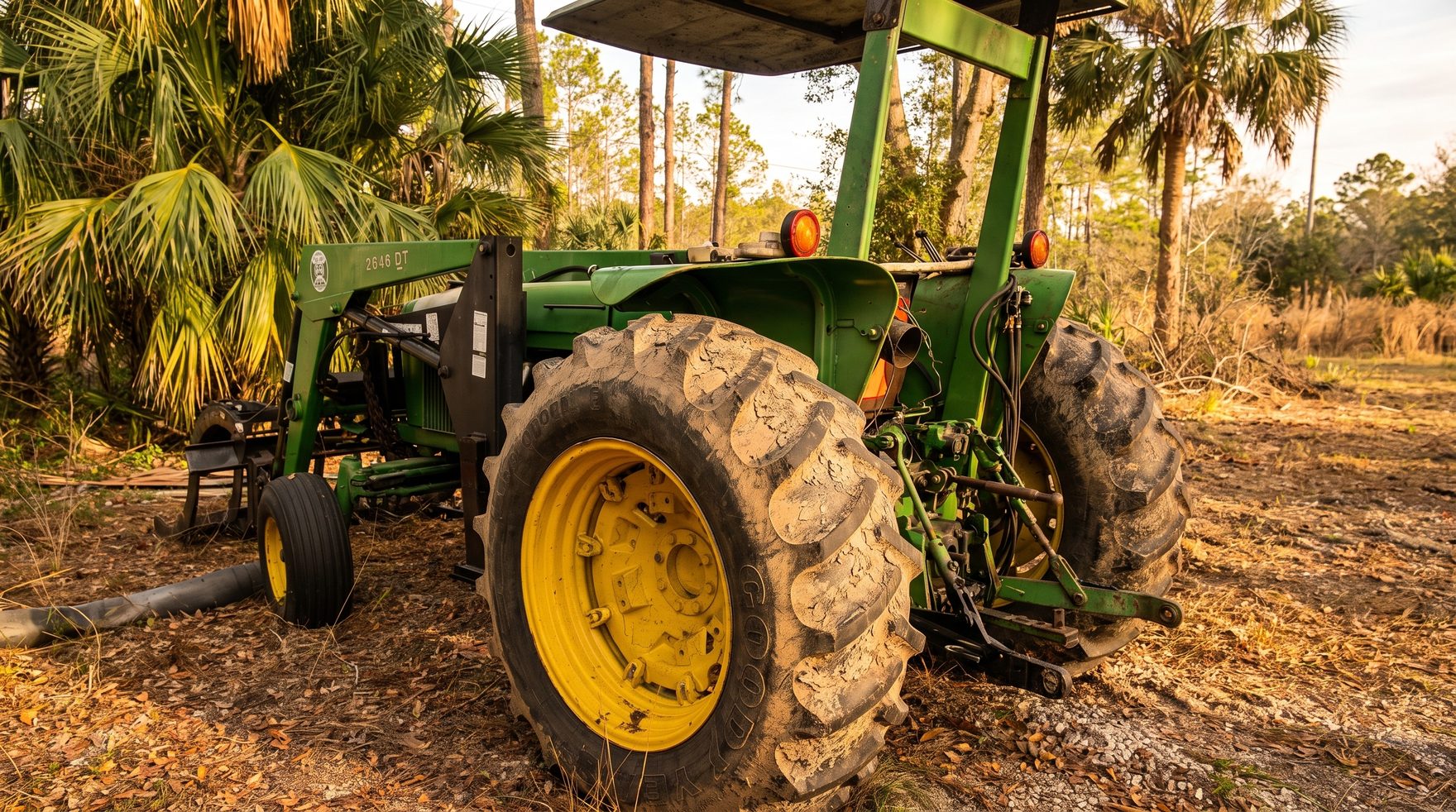
You turn the key and get one of two things: nothing, or a whole lot of cranking and no love. Either way, hay's not baling itself and the field isn't getting any drier. Your first move is probably to call the dealer, who will cheerfully tell you they can look at it in three weeks, which is a real solution if your problem is patience, not a tractor. Here's the thing though, a dead tractor almost never means a dead tractor. It means one of about five things, and most of them take longer to explain than to fix. So before you start pricing a new one out of spite, let's split this the right way.
First question: does it crank, or does it just sit there?
This is the fork in the road and it matters more than anything else you check. No-crank means you turn the key and get silence, a click, or a weak little groan that goes nowhere. That's an electrical or safety problem, the engine never even tries to turn over.
Crank-no-start means the engine spins like it should, sounds normal doing it, but never fires. That's almost always fuel or, on cold days, a missing glow plug cycle. Two completely different repairs live behind those two symptoms, so don't waste an hour on fuel lines if the real problem is a seat switch.
No-crank: the usual suspects (and the one nobody thinks of)
If nothing happens when you turn the key, work down this list in order. Batteries and connections are cheap and boring to check, so start there before you assume the starter's shot.
Weak or dead battery, slow crank, dim lights, or nothing at all. Cold mornings make a marginal battery show its true colors fast.
Corroded or loose connections, green crust on the terminals or a cable that wiggles is enough to kill a start even with a good battery.
Bad starter or solenoid, a single loud click and nothing else usually points here, especially if the battery tests fine.
A safety interlock not made, this is the one everybody skips and it's honestly the number one hidden cause on tractors. Seat switch not sensing you, PTO not fully disengaged, transmission or range not in neutral, or the clutch or brake not depressed the way the system wants it, any of those will kill the start circuit completely and the tractor doesn't tell you why.
"Half the 'dead tractor' calls I run aren't dead at all. They're just refusing to start until you sit down right and put everything where it belongs."
Crank-no-start: it's spinning, it's just not catching
If the engine's turning over fine but won't fire, the electrical side is doing its job. Now it's about getting fuel in, clean, and on time.
Diesel that's sat too long, or gelled up on a cold night, won't atomize right and the engine just won't catch no matter how long you crank it. A clogged filter starves it the same way. Air that's worked into the fuel lines will keep an engine cranking forever without a single pop. A weak lift pump can't build enough pressure to push fuel through, so the injectors never get what they need. And on cold mornings, if the glow plugs never get their signal to preheat, diesel just isn't going to light off, that's not a mechanical failure, that's a missing step in the startup sequence. Beyond all that, you're looking at an actual injection problem, which is where this stops being a driveway job.
What you can safely check before you call anybody
None of this requires tools you don't already own, and it can save you a service call if the fix is simple.
- Battery terminals, clean, tight, no green crust. Wiggle test them by hand.
- Seat and neutral position, make sure you're fully seated, PTO's off, and the transmission or range lever is dead center in neutral before you try again.
- Fuel level and fuel age, if it's sat all winter with old diesel in the tank, that's a real suspect, not a maybe.
- Fuel filter housing, look for water or debris in the bowl if it's a see-through style.
- Dash lights and codes, on newer tractors, a code reader (or even just watching what lights up on the dash) will usually point straight at the failed system instead of you guessing.
Questions
Won't-start, quick answers
My tractor clicks once but won't crank, what's that mean?
A single click usually points to a bad starter solenoid or a weak battery that can't push enough current. Check the battery and connections first, then the starter if those test fine.
It cranks strong but won't fire, is that fuel or electrical?
Strong cranking with no start is almost always fuel related: old or gelled diesel, a clogged filter, air in the lines, or a weak lift pump. On cold starts, check whether the glow plugs are cycling.
Why would my tractor not start even though the battery is fine?
Safety interlocks are the most overlooked cause. The seat switch, PTO status, neutral position, or clutch and brake position all have to be satisfied or the start circuit won't engage, even with a perfectly good battery.
Written by
Tyler Reed, Reed's Mobile Services
Tyler is a mobile heavy equipment mechanic and welder based in Middleburg, Florida, with 12 years turning wrenches on excavators, loaders, dozers, and tractors. He fixes machines where they sit, across North Florida and South Georgia. Got one down? Call or text (352) 507-3088.